
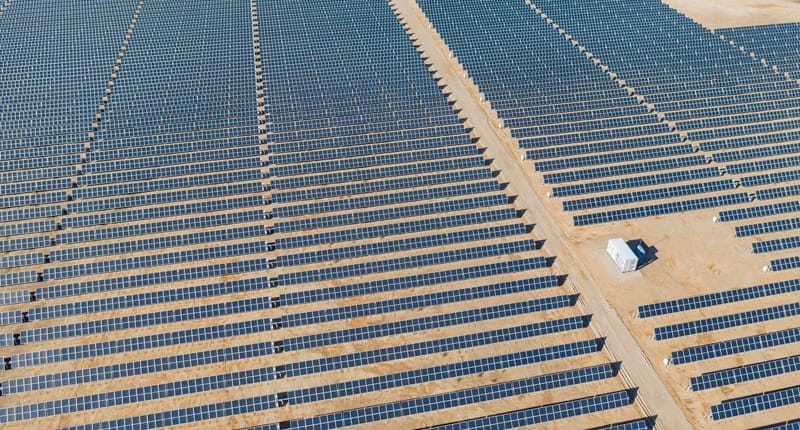
Industry: Energy – 64 MW Concentrated Solar Farm
Date: December 2020
The Challenge
In December 2020, a 64 MW concentrated solar farm in Nevada faced a difficult operational decision. After 23 years of service, the facility’s 300,000-gallon heat transfer fluid (HTF) — a diphenyl oxide/diphenyl (DPO/DP) system — was nearing the end of its useful life. High boiler concentrations (heavy degradation byproducts) had climbed to a risky 10.5%, threatening both system efficiency and Environmental, Health & Safety (EHS) compliance.
With seven years remaining on a 30-year power purchase agreement and no planned shutdowns on the horizon, management had limited options. A full system replacement with virgin fluid ran well into seven figures — cost-prohibitive for a facility in its final contract term. Yet leaving the fluid untreated was equally untenable. What they needed was a solution that could restore the system without ever taking it offline.
Business Requirements
- Manage degradation in a large-scale 300,000-gallon DPO/DP system
- Extend reliable performance through the final 7 years of the contract term
- Reduce HTF high boiler concentrations from 10.5% to acceptable operating levels
- Maintain continuous energy production with zero planned downtime
Project Outcomes
- Replaced 84,000 gallons (28% of total system volume) with high-quality reclaimed HTF — avoiding a full drain and refill
- Reduced high boiler concentrations from 10.5% to below 7%, meeting all technical targets
- Achieved approximately 70% cost savings by using reclaimed rather than virgin fluid
- Maintained uninterrupted plant operations throughout the entire treatment process
Key Takeaway
Aging solar facilities don’t always face a binary choice between expensive full replacement and declining performance. Through a carefully executed “Bleed and Feed” approach — gradually cycling out degraded fluid and replacing it with reclaimed HTF while the plant ran at full capacity — this facility restored fluid health, met its EHS obligations, and saved roughly 70% in material costs. It’s a model worth considering for any long-term solar asset approaching the end of its fluid life.
